Space Cowboy Embroidery Design Review
When I sit down to evaluate a new digital asset for my studio, I am rarely looking for just another pretty picture. As a designer who frequently bridges the gap between digital graphics and physical machine embroidery, my primary concern is always execution. Will this design hold up on a curved cap? Will it translate well onto a cotton tote bag without looking muddy? Today, I am putting Space Cowboy under the microscope to determine if it deserves a spot in your commercial library or personal craft stash.
The product listing categorizes this item under Crafts and Graphics, providing PNG, JPG, PDF, EPS, and AI files at 300 dpi with a transparent background. However, there is a critical disclaimer that immediately catches my eye: this cannot be made into an SVG file because the pieces cannot be separated and often have shadowing that would prevent a clean cut. This detail alone tells me that Space Cowboy is intended strictly as a raster-based graphic or vector illustration for printing or digital use, rather than a stitch-ready machine embroidery file. For those of us in the handmade business, understanding this distinction is vital before attempting to digitize or adapt the work.
First Impressions and Visual Personality
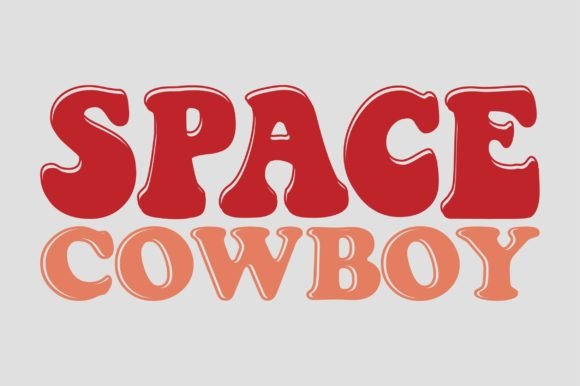
The name "Space Cowboy" suggests a blend of rugged Americana and futuristic whimsy. In practice, the visual personality of this design leans heavily into bold, illustrative lines. The mood it creates is playful yet edgy, making it an excellent candidate for brands that want to project creativity and non-conformity. When I look at the layout, the composition feels balanced, avoiding the cluttered look that often plagues complex digital art when scaled down.
For a custom apparel decorator or an Etsy seller, this kind of strong visual identity is gold. It does not require intricate, tiny details to read clearly from a distance. The shapes are distinct, which means even if the final print or transfer loses a fraction of its sharpness, the core image remains recognizable. This is particularly important for custom apparel like sweatshirts or t-shirts, where the garment moves and stretches, potentially distorting finer lines.
Real-World Application Scenarios
To truly test a design's viability, I imagine it in specific real-life scenarios. Let’s say I am preparing a batch of embroidered patches for a boutique clothing line. While Space Cowboy is provided as a graphic, many creators attempt to trace these assets into embroidery software. If used as a base for a large applique design, the solid areas would likely translate well into fill stitch, while the outlined elements could become satin stitch borders. However, the warning about unseparable pieces is a red flag for digitizers. If you attempt to separate the layers manually, the shadowing effects mentioned in the description will result in jagged, messy edges that ruin the professional finish.
Consider a different angle: a small business owner selling personalized gifts. Space Cowboy fits perfectly into the niche of holiday embroidery or unique birthday gifts. Imagine a high-quality canvas tote bag featuring this design printed via heat transfer or sublimation. The 300 dpi resolution ensures that when the customer holds the bag, the image is crisp. It adds a touch of humor and style that appeals to teens and young adults, making it a strong contender for Etsy listings targeting that demographic.
Another practical use case is nursery decor or baby items. While the theme might seem mature, stylized versions of space-themed graphics are popular in modern nurseries. If adapted correctly, this design could serve as a focal point on a blanket or a pillow cover. The key here is color selection. Pairing the graphic with muted pastels can soften the "cowboy" edge, making it suitable for baby embroidery projects.
Where to Use Space Cowboy Carefully
Not every surface is created equal, and Space Cowboy has limitations depending on how you intend to apply it. If you are planning to use this as a direct-to-garment (DTG) print or a vinyl decal, avoid applying it to highly textured fabrics like heavy bouclé wool or loose-weave burlap. The graphic relies on clean lines; rough textures will disrupt the visual integrity of the image.
Furthermore, be cautious with stretchy fabrics such as spandex blends or thin jersey knits unless you use a stabilizer specifically designed for stretch. Without proper support, the weight of any accompanying embroidery or the tension of a heat press can cause the design to pucker or distort over time. This is especially relevant for caps and hats, where the curved surface demands precision. A rigid graphic like this may not conform smoothly to the front panel of a baseball cap unless it is carefully heat-pressed with appropriate pressure and time.
I also advise against using this design for products that require frequent washing, such as kitchen towels or dishcloths, unless you are certain of the durability of your printing method. Standard inkjet prints on fabric may fade quickly, whereas high-quality sublimation or screen printing would offer better longevity. Always check the care instructions of your chosen material to ensure the finished product withstands the wear and tear of daily use.
Practical Designer Notes for Implementation
Before incorporating Space Cowboy into your workflow, there are several technical steps you must take to ensure success.
- Test on Scrap Fabric: Never commit to a full production run without testing the application method on a scrap piece of the actual fabric you plan to use. This reveals issues with adhesion, color bleeding, or texture interference early.
- Check Thread Color Contrast: If you are converting this graphic into an embroidery file, remember that thread colors behave differently than screen ink. A light gray outline might disappear on white fabric but pop on black. Test your thread colors against your base material.
- Review Stitch Density: If digitizing this design, pay close attention to stitch density. Areas that appear solid in the graphic may need to be broken up into running stitch or fill stitch patterns to prevent puckering. Dense stitch areas can stiffen the fabric, which is undesirable for soft garments like sweatshirt embroidery.
- Confirm Hoop Size: Ensure the design dimensions fit within your machine’s maximum hoop size. Scaling a large graphic down too much can lose detail, while scaling it up may exceed your workspace limits.
- Inspect Small Details: Look closely at the corners and fine lines of the original file. Are they too thin to reproduce accurately? If so, consider simplifying the design before production.
- Use Proper Stabilizer: The choice of stabilizer—cut-away, tear-away, or wash-away—depends entirely on the fabric and the design’s stability needs. A heavy graphic on a lightweight tee requires a sturdy cut-away stabilizer to maintain shape.
- Black and White Mockups: View the design in grayscale to check contrast levels. Sometimes colors that look good on screen fail to provide enough separation in a monochrome context.
- Compare Light and Dark Backgrounds: Test the graphic on both light and dark fabrics. The transparent background provided in the PNG file is helpful, but you must verify how the design interacts with the underlying color.
- Verify Licensing: Most importantly, confirm whether you have the right to sell finished items made with this design. Commercial licenses vary widely. Using a digital embroidery file or graphic for commercial embroidery without proper permission can lead to legal issues.
Final Verdict on Value and Appeal
Ultimately, Space Cowboy offers strong visual appeal and versatility for the right applications. Its bold aesthetic makes it an effective tool for brand consistency, helping small shop products stand out in a crowded marketplace. For the craft business owner, it provides a ready-made asset that can save hours of design time, allowing you to focus on marketing and customer service.
However, its value is contingent on correct usage. It shines as a high-resolution graphic for printing, sublimation, or digital mockups. It struggles as a direct source for complex machine embroidery due to its inseparable layers and shadowing. By respecting these boundaries and following practical preparation steps, you can leverage this design to create professional, trustworthy, and engaging handmade products that customers will love.